By Dr Deepu

Potentially higher risk of death seen in people with rare disease that has no approved treatments
Bayer has stopped a Phase 2 clinical trial (NCT02138825) evaluating riociguat (Adempas) in patients with pulmonary hypertension associated with idiopathic interstitial pneumonias (PH-IIP) on the recommendation of the study’s Data Monitoring Committee (DMC).
Download the ChestMedicine.org free app from playstore

The committee — sometimes called a data and safety monitoring board — is an independent group of experts who monitor patient safety and treatment efficacy data during a clinical trial. While reviewing the riociguat data, the DMC determined that patients receiving this treatment were at a potentially higher risk of death and other serious adverse events compared to those receiving a placebo. The DMC did not find any particular cause or common characteristic in the patients who died, but many were found to have more advanced lung disease than the clinical trial cohort as a whole.
People taking part in the trial will be monitored for safety for a minimum of four months after discontinuing treatment, Bayer said.
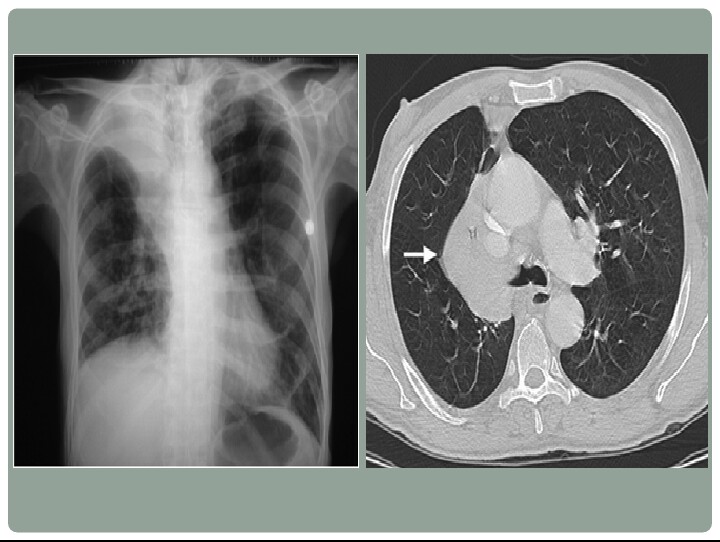
PH-IIP is a severe and rare disease. Pulmonary hypertension (PH) is an increase of blood pressure in the pulmonary artery, pulmonary vein, or pulmonary capillaries, together known as the lung vasculature, leading to shortness of breath, dizziness, leg swelling, and other symptoms. PH is increasingly recognized as a complication of interstitial lung disease (ILD). It can exist when ILD is mild, but is more common when hypoxemia and severe pulmonary dysfunction exist.
IIPs are ILDs of unknown etiology that share similar clinical and radiologic features, and are distinguished primarily by the histopathologic patterns found in a lung biopsy, being characterized by varying degrees of inflammation and fibrosis. All IIPs cause dyspnea. Treatment varies by subtype, as does disease prognosis.
Patients with PH-IIP are a high-risk patient population with an estimated mortality rate of over 20% within one year. Currently, there are no approved treatments for PH-IIP.
Riociguat’s positive benefit-risk profile for its approved indications has not been altered, including its use to treat pulmonary hypertension patients in WHO Groups 1 and 4. Bayer announced that it is carefully examining riociguat’s efficacy and safety on an ongoing basis.
“We understand that the need to terminate the study in PH-IIP is very disappointing for patients suffering from this disease, as well as for their doctors and healthcare providers. There is a significant unmet medical need for PH-IIP patients as there are no approved treatments, and finding an effective treatment remains a challenge,” said Dr. Joerg Moeller, a member of the Bayer Pharmaceuticals Executive Committee and head of Global Development, in a press release. “Bayer remains committed to identifying new therapeutic options and to improving the lives of patients in disease areas where there is a high unmet medical need such as pulmonary hypertension.”
Adempas is Bayer’s novel formulation to treat PH patients. Chemically known as riociguat, the drug is the first of a new class of stimulators of soluble guanylate cyclase (sGC), an enzyme responsible for vasodilation and lowering of blood pressure, and the only receptor of nitric oxide in the body.

Potentially higher risk of death seen in people with rare disease that has no approved treatments
Bayer has stopped a Phase 2 clinical trial (NCT02138825) evaluating riociguat (Adempas) in patients with pulmonary hypertension associated with idiopathic interstitial pneumonias (PH-IIP) on the recommendation of the study’s Data Monitoring Committee (DMC).
Download the ChestMedicine.org free app from playstore
The committee — sometimes called a data and safety monitoring board — is an independent group of experts who monitor patient safety and treatment efficacy data during a clinical trial. While reviewing the riociguat data, the DMC determined that patients receiving this treatment were at a potentially higher risk of death and other serious adverse events compared to those receiving a placebo. The DMC did not find any particular cause or common characteristic in the patients who died, but many were found to have more advanced lung disease than the clinical trial cohort as a whole.
People taking part in the trial will be monitored for safety for a minimum of four months after discontinuing treatment, Bayer said.
PH-IIP is a severe and rare disease. Pulmonary hypertension (PH) is an increase of blood pressure in the pulmonary artery, pulmonary vein, or pulmonary capillaries, together known as the lung vasculature, leading to shortness of breath, dizziness, leg swelling, and other symptoms. PH is increasingly recognized as a complication of interstitial lung disease (ILD). It can exist when ILD is mild, but is more common when hypoxemia and severe pulmonary dysfunction exist.
IIPs are ILDs of unknown etiology that share similar clinical and radiologic features, and are distinguished primarily by the histopathologic patterns found in a lung biopsy, being characterized by varying degrees of inflammation and fibrosis. All IIPs cause dyspnea. Treatment varies by subtype, as does disease prognosis.
Patients with PH-IIP are a high-risk patient population with an estimated mortality rate of over 20% within one year. Currently, there are no approved treatments for PH-IIP.
Riociguat’s positive benefit-risk profile for its approved indications has not been altered, including its use to treat pulmonary hypertension patients in WHO Groups 1 and 4. Bayer announced that it is carefully examining riociguat’s efficacy and safety on an ongoing basis.
“We understand that the need to terminate the study in PH-IIP is very disappointing for patients suffering from this disease, as well as for their doctors and healthcare providers. There is a significant unmet medical need for PH-IIP patients as there are no approved treatments, and finding an effective treatment remains a challenge,” said Dr. Joerg Moeller, a member of the Bayer Pharmaceuticals Executive Committee and head of Global Development, in a press release. “Bayer remains committed to identifying new therapeutic options and to improving the lives of patients in disease areas where there is a high unmet medical need such as pulmonary hypertension.”
Adempas is Bayer’s novel formulation to treat PH patients. Chemically known as riociguat, the drug is the first of a new class of stimulators of soluble guanylate cyclase (sGC), an enzyme responsible for vasodilation and lowering of blood pressure, and the only receptor of nitric oxide in the body.